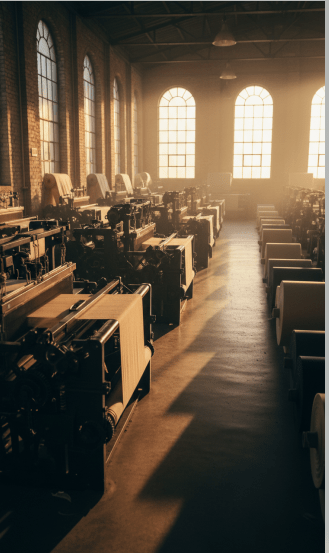
There is a specific rhythm to a denim mill at 3:00 AM. The hum of the machines is constant, but the chemistry inside the dye vats is anything but stable.
For years, I’ve watched skilled operators struggle with a “ghost” in the machine: Redox instability. Traditionally, we’ve relied on manual guesswork to dose Hydrosulphite. If the operator is tired or the sensor drifts, we end up with “B-Grade” fabric, wasted chemicals, and a massive headache for the export manager.
I decided to see if I could use my background in Textile Engineering and Data Science to give our local mills a “Digital Brain” that never sleeps.
The Problem: The High Cost of “Close Enough”
In our industry, “close enough” is no longer good enough. With the EU’s new Green Deal and Digital Product Passports (DPP) coming in 2026, international buyers like Levi’s and H&M are asking for more than just quality fabric—they want data. They want to know exactly how much water and chemical went into every meter of denim.
Manual paperwork can’t keep up. Human error during night shifts can’t be hidden. We needed a system that sees what we can’t.
My Approach: The “Indigo-Optimizer”
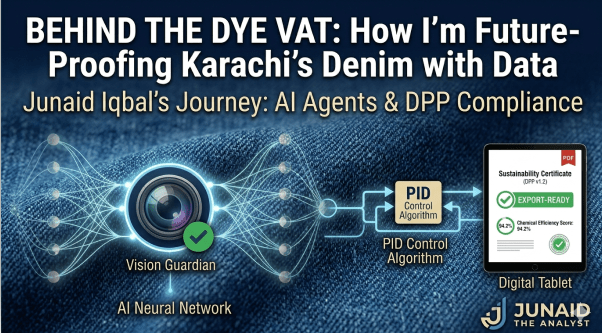
I built a prototype called Indigo-Optimizer AI. I didn’t want just a “reporting tool”; I wanted a system that actually acts. Here is how it works in plain English:
- It “Sees” the Color: Using a standard camera, the system monitors the blue intensity of the fabric. If it starts to fade, the AI notices it before the human eye does.
- It “Balances” the Chemistry: Using a mathematical method called PID Control (the same logic used in self-driving cars), the system calculates the exact milligram of Hydro needed to stabilize the bath. No more “dumping sacks” of chemicals by guess.
- It “Predicts” Breakdowns: By listening to the vibration of the pumps, the system warns us if a part is going to fail before the line stops.
- It “Writes” the Audit: At the end of the batch, the system automatically generates a Sustainability Certificate.
Why This Matters for Karachi
This isn’t just about cool tech. It’s about competitiveness. By reducing chemical waste by 12% and guaranteeing “A-Grade” quality, our local mills can lower costs while meeting the strictest European standards. We are moving from “Manual Labor” to “Smart Manufacturing.”
Deep Dive into the Project
For my fellow engineers and developers, I’ve made all my documentation and logic available for review:
- View the Full Technical Presentation (PDF) – A slide-by-slide breakdown of the business ROI and system architecture.
- Read the Technical README File – A detailed look at the agents, sensors, and logic flow.
- Review the Code on GitHub – Check out the Python implementation, the PID logic, and the Digital Twin dashboard.
Let’s Build the Future Together
I believe the best solutions aren’t bought off a shelf—they are built on the factory floor by people who understand the grit of the industry.
I’m currently exploring new ways to apply these “Digital Twin” concepts to other areas of manufacturing and supply chain compliance. If you’re looking to optimize a process, solve a recurring quality issue, or simply want to chat about the intersection of textiles and data, I’d love to hear from you.



Leave a comment